
Wine Tasting Sessions
What actually happened when we put old world and new world wines side-by-side

There is something slightly dangerous about hosting a wine tasting around the theme of old world vs new world. Mostly because everyone arrives assuming they already know what the conclusion will be - you can’t beat the Europeans.
Old world wines are restrained, elegant and complex. New world wines are supposedly bigger, fruitier and louder. Europe brings sophistication, newer regions bring power.
But the more wine I drink, the less convinced I become that those old distinctions still fully hold up, especially if you know where to look. The lines are blurring.
So this tasting is not really designed to pick a winner. It is more an exploration of how differently, and sometimes surprisingly similarly, producers around the world approach the same grapes and styles. And more importantly, why that makes wine so endlessly interesting.
Sparkling: Germany vs a Modern Classic
I wanted to avoid the obvious starting point.
A French champagne against an English sparkling wine would have been easy. Predictable, even. A gimmick. So instead, the opening flight goes somewhere slightly more interesting: Germany versus South Africa.
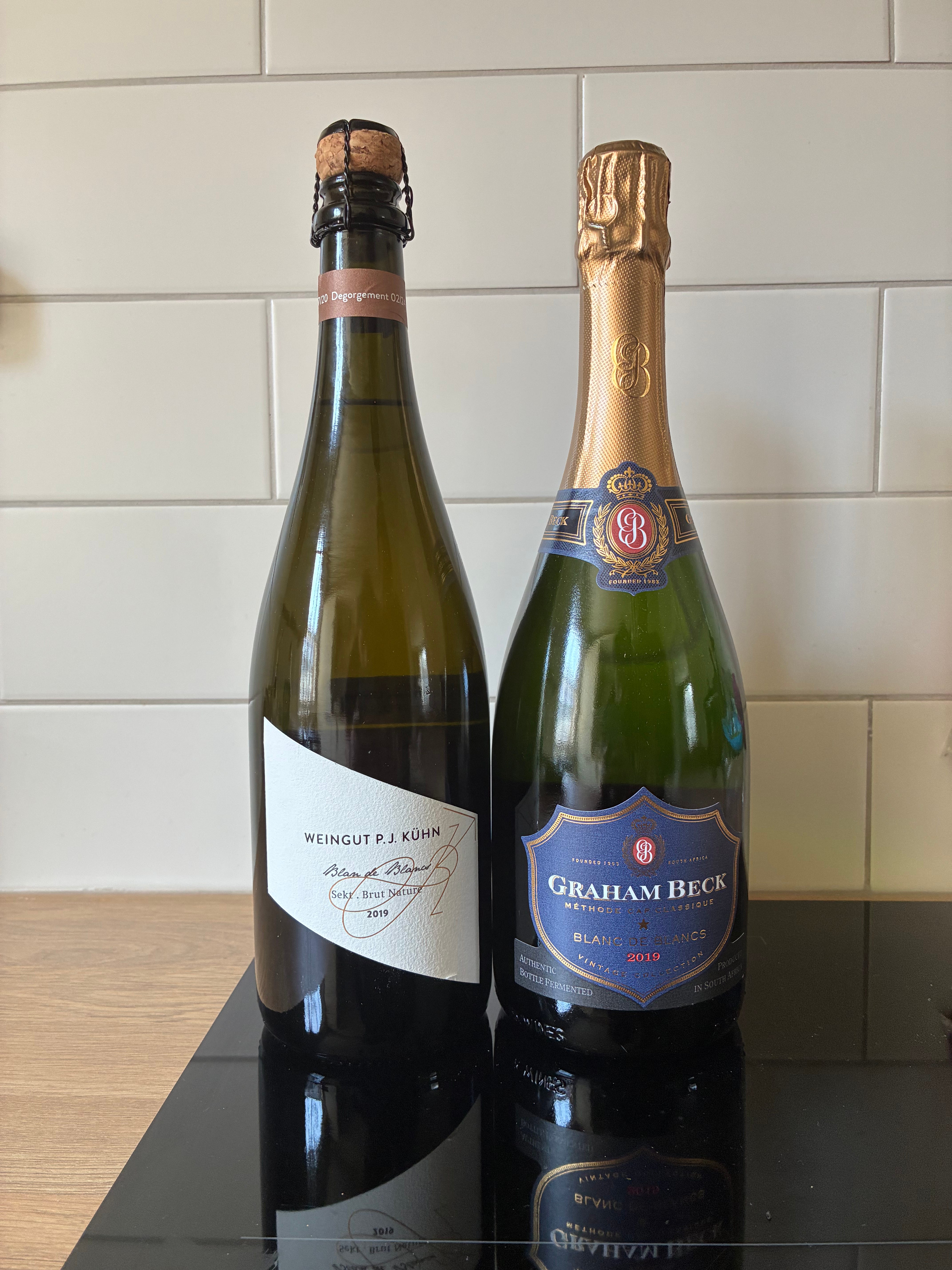
The Peter-Jakob Kühn Blanc de Blancs represents a style of sparkling wine that still flies under the radar. German sparkling has historically sat in Champagne’s shadow, but producers like Kühn are showing just how serious it can be. Mineral, no residual sugar that can sometimes be found in sekt, and driven by acidity rather than overt richness.
Alongside it sits Graham Beck Blanc de Blanc, which has quietly become one of the stalwarts of premium new world sparkling wine. It is polished and tastes like a bakery without losing freshness.
What I love about this comparison is that both wines are rooted in precision, they simply show it differently.
Riesling: The Most Misunderstood Great Grape
If there is one mission of the evening, it is probably this flight.
Riesling still suffers from one of the worst reputations in wine. Too many people associate it with cheap sweetness or supermarket bottles from decades ago, when in reality it is one of the world’s great fine wine grapes.
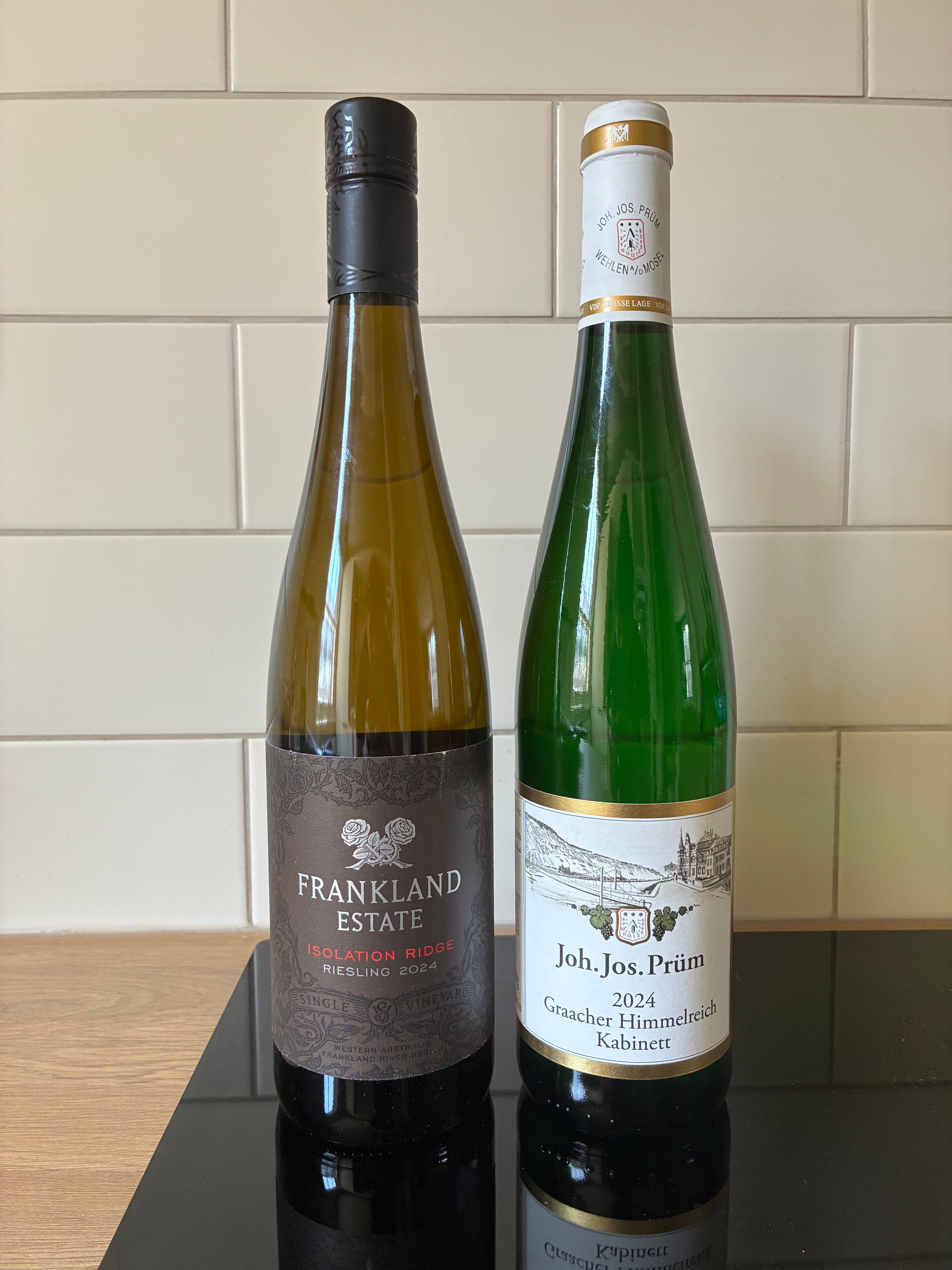
The Joh. Jos. Prüm Kabinett from the Mosel is there to show Riesling at its most delicate and profound: low alcohol, high acidity, textured and incredible intensity and finish.
Then comes Frankland Estate from Western Australia, which demonstrates something entirely different. Bone dry and razor-sharp with lime and minerality but perfect for the sun.
Same grape. Entirely different interpretation.
I suspect this will end up being the most divisive and perhaps the most eye-opening comparison of the evening.
Chardonnay: Climate, Oak and Control
Chardonnay is fascinating because it is such a transparent grape for both climate and winemaking decisions. You can tell instantly.
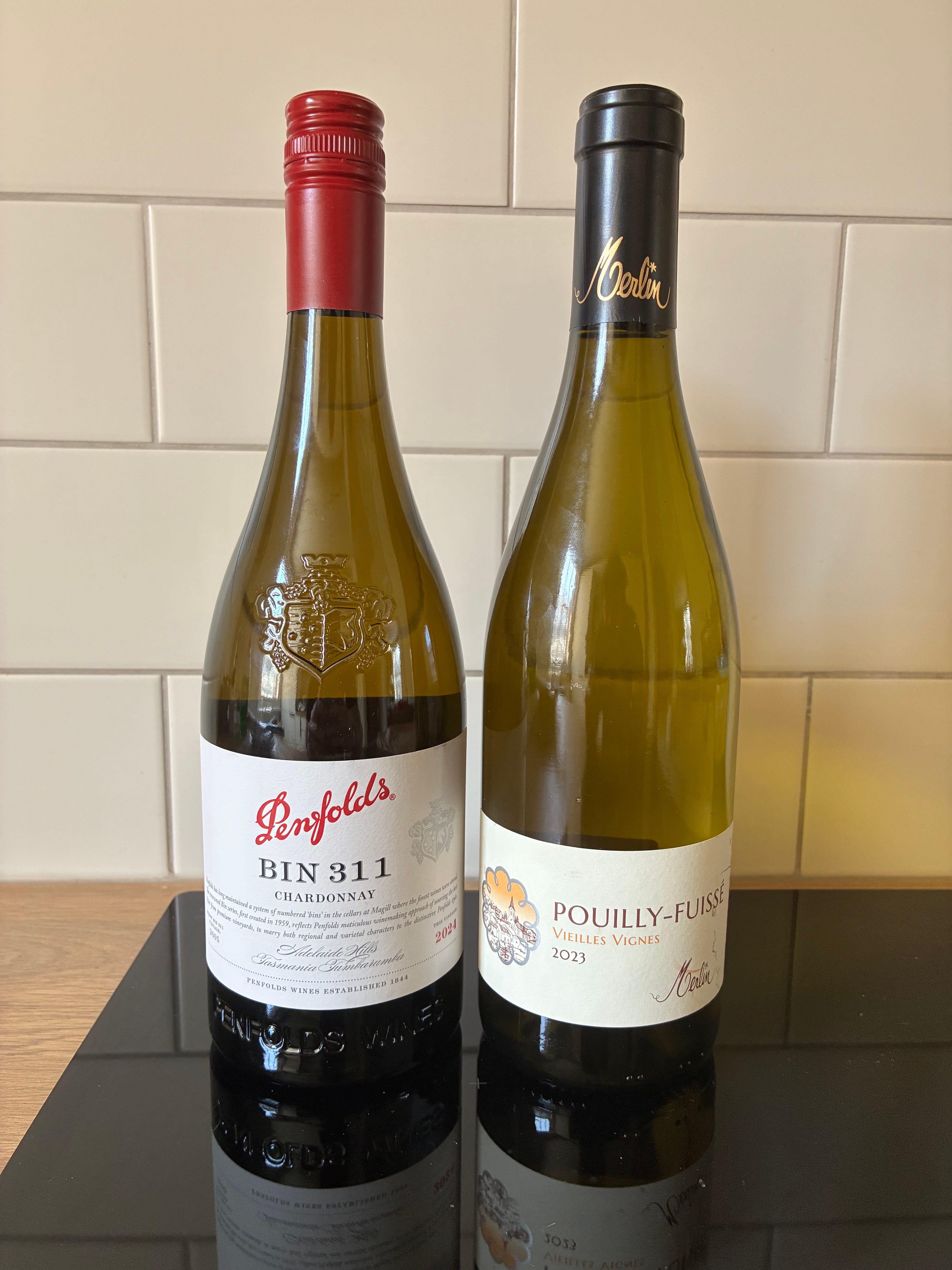
The Olivier Merlin Pouilly-Fuissé leans into what great white Burgundy does so well: texture, depth and savoury complexity built through subtle oak and cooler-climate balance.
The Penfolds Bin 311 shows how far Australian chardonnay has evolved. Less caricatured in its richness, it’s way more control. There is still loads of fruit, but complexity comes from the freshness and depth that now sit at the centre of the wine.
This flight is less about which is better and more about how different climates and philosophies shape the same grape.
It is also a reminder that many new world regions are now chasing elegance just as much as power.
Rosé: A Reset before the Reds
At some point in any tasting, the palate needs resetting.
The Loire rosé from Rémi Sedes Samplemousse (great play on words) acts as that pause in the evening, but with a slight natural-wine twist.
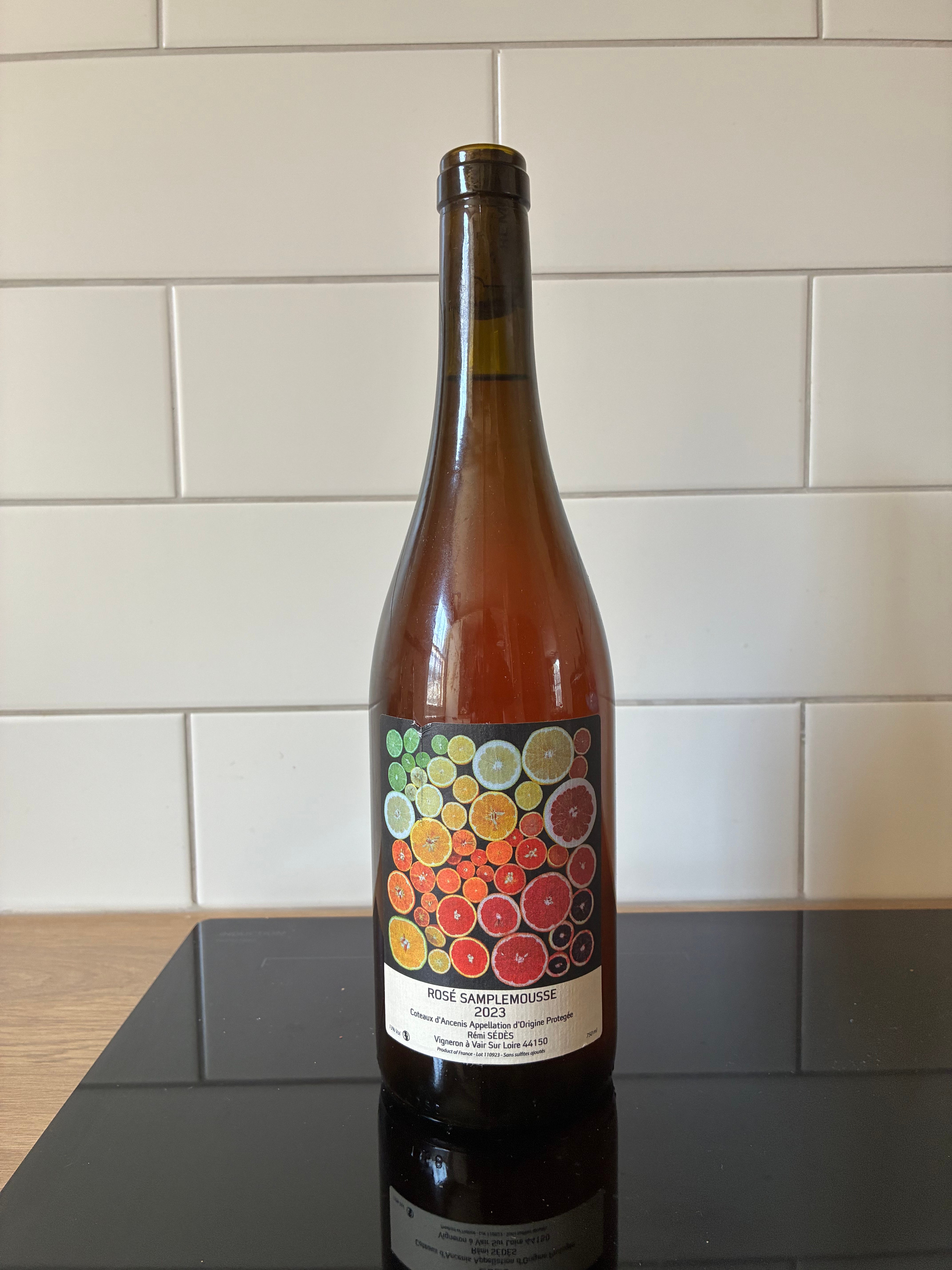
Fresh, energetic and slightly untamed, it sits somewhere between serious wine and pure summer drinking. The sort of bottle that encourages people to simply enjoy what is in the glass.
Which, ultimately, is still the point of all of this.
The Reds: Complexity vs Immediate Pleasure
The final flights are probably where the old stereotypes become most visible.
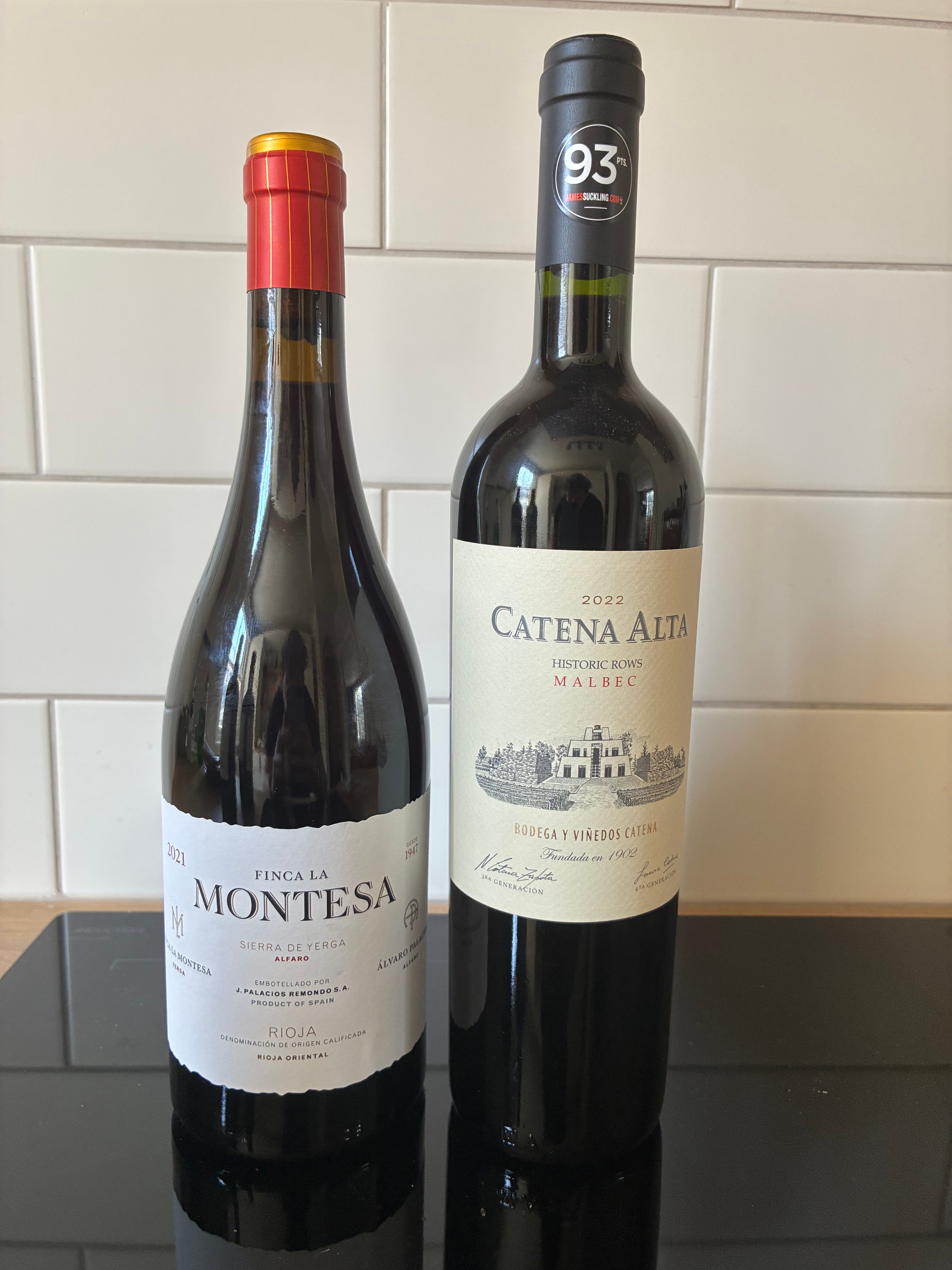
The European wines from Tuscany (Le Volte d’Ornellaia) and Rioja (La Montesa Crianza) are built around savouriness, structure and complexity. They unfold more slowly so will be decanted prior to serving. The fruit is there, but it shares the stage with herbs, spice, tobacco, earth and acidity.
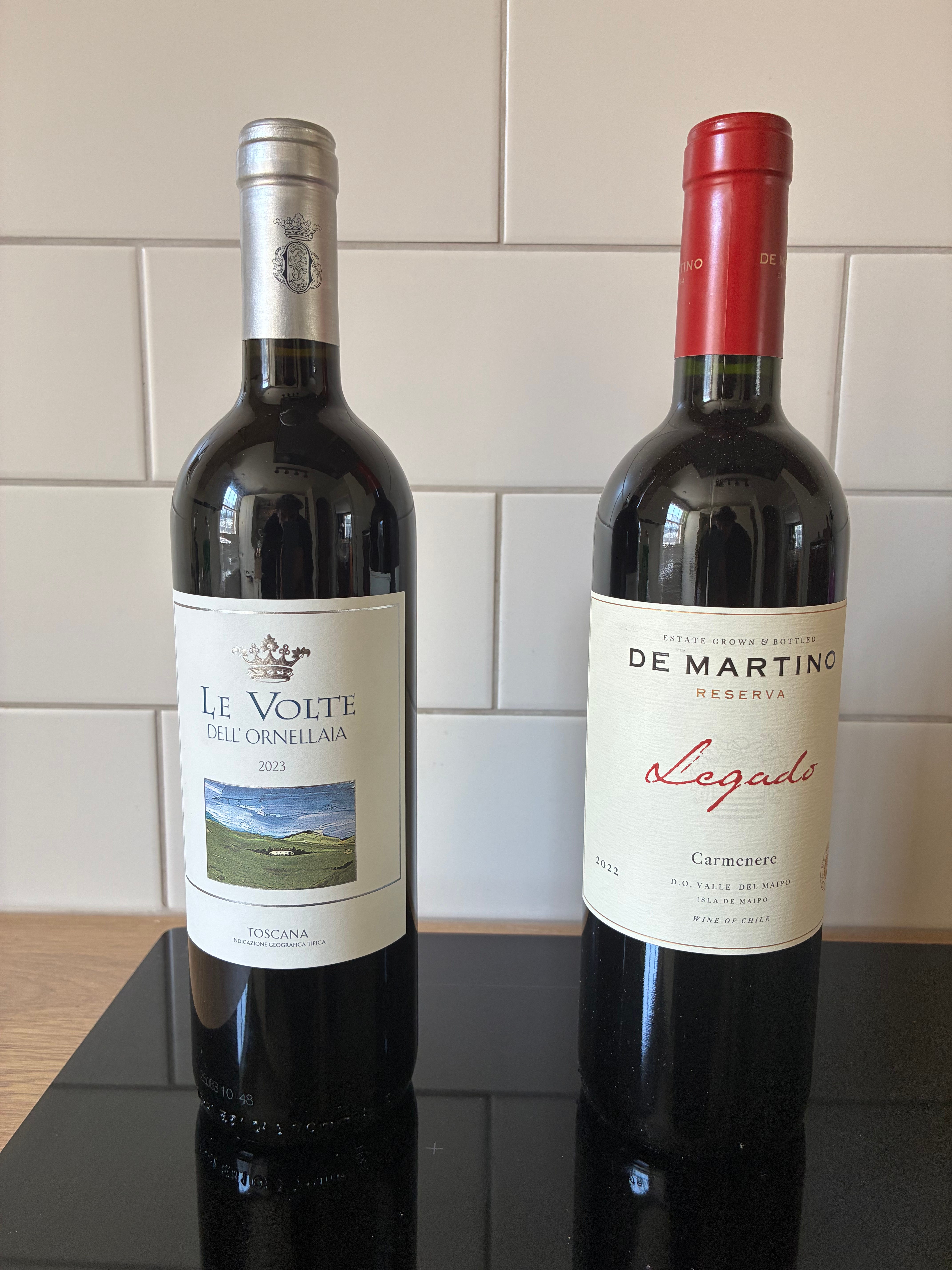
The new world reds from Chile (De Martino Carmenere) and Argentina (Catena Zapata Malbec) are more immediate in their appeal. Darker fruit, more overt richness, softer textures and greater depth of concentration to finish the night.
That is not a criticism — far from it.
There is something inspiring about the confidence of new world reds. They often announce themselves immediately and unapologetically and I find myself further drawn to them.
I guess the overarching point is I find it fascinating how both styles increasingly borrow from each other.
New world producers are pursuing freshness and restraint more than ever before. Old world wines are often riper and more polished than their historical reputation suggests.
The gap between them is narrowing.
And that, really, is the reason for this tasting in the first place.
Love,
Harry
Another superb point of view 👌