
Wine Tasting: Tasting Tips
Quick and easy steps to getting a bit further under the hood of the wine you're tasting

The first thing they teach you when doing any qualification in wine, is the official, systematic approach to tasting wine, despite taste (and more importantly enjoyment) being such a subjective human sense. Thing is, someone’s got to figure out if the wine is objectively good, and subsequently what the price point should be, whether its ready to be quaffed, and finally whether its worth passing onto consumers and charging a pretty penny for. The whole industry pretty much relies on a common language and lexicon to exist, so there is a mutual understanding and appreciation of the wine on the table.
Issue is, we could be here all day explaining each nuance of tasting and what you should be looking out for at each point but I want to set the scene, provide a couple of nuggets, and explain the process.
Number 1, setting your environment.
I never do this, and it’s actually really hard to achieve in most wine filled environments because you’re either in a crowded and loud restaurant, at a bar etc, but in an ideal world, to maximise the experience, you effectively want to be in a hospital hallway. Good lighting to see every minor blemish, no strong odours, white surfaces, buckets... All jokes aside, as little distraction from the wine and your ability to see and taste it, is important. You definitely don’t want to be scranning on prawn cocktail crisps or frazzles right before taking a sip - might skew your tasting ability a little. Now - onto the process.
The 5 S’s of tasting are as follows:
See (Appearance of the wine)
Look at the wine either from directly above, so you’re looking down at the stem of the glass, or tilt to 45 degrees and look into the light at the colour and refer back to the following scale:
Red wine: purple - ruby - garnet - tawny - brown
White wine: lemon/green - lemon - gold - amber - brown
Rosé wine: pink - pink/orange - orange
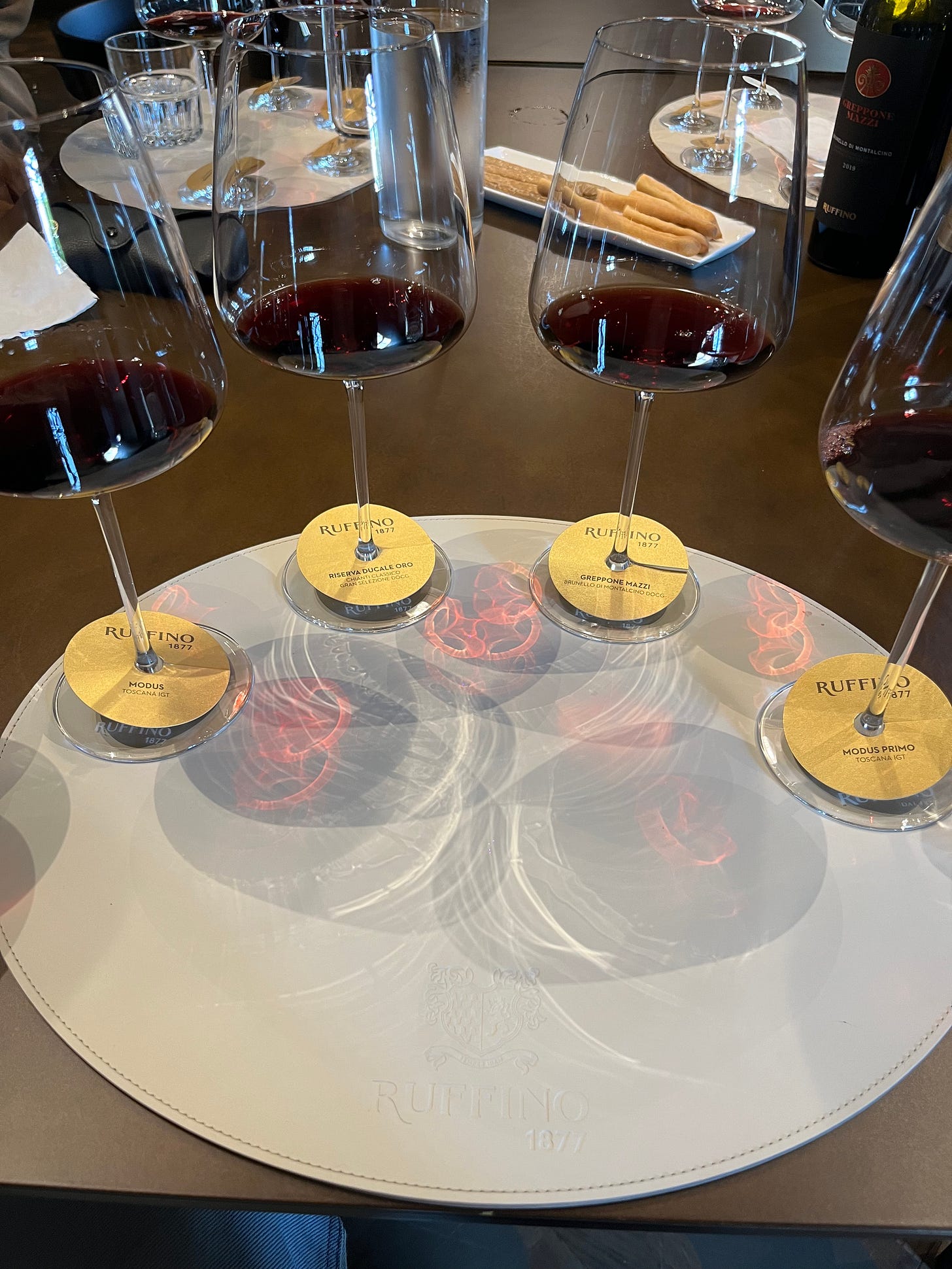
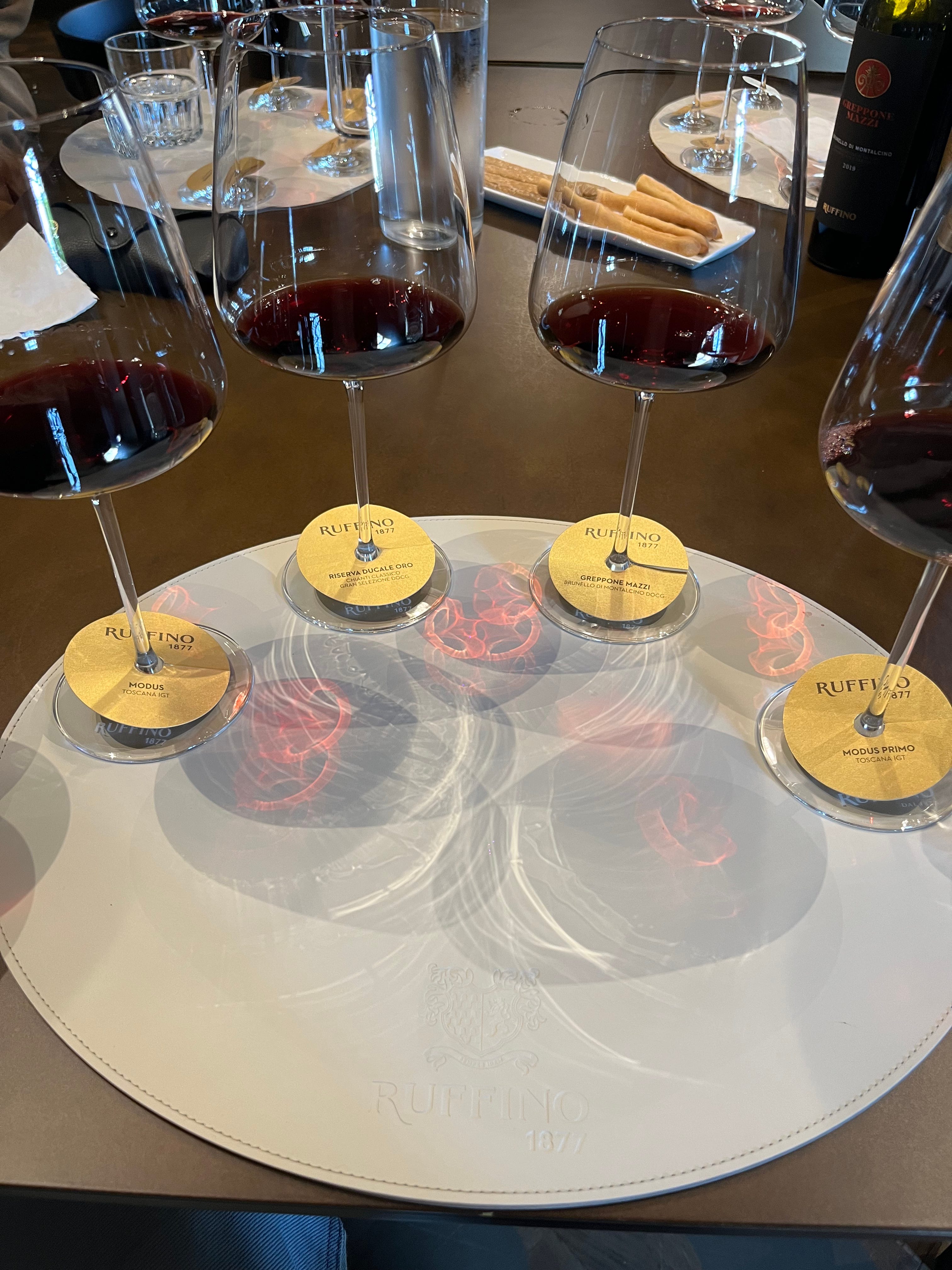
In the picture above, you can see the middle right wine, is slightly paler (you can see the stem much clearer), and I’d suggest all fall under the colour ‘ruby’.
Swirl
Swirl the wine in the glass to aerate the wine to get the aromas to fill the glass. For this I’d also recommend an actual aerating device when pouring the wine like this Le Creuset one, or opening it for a decent amount of time before tasting - to let the bottle ‘open up’. You very rarely get every ounce of flavour when pop goes the cork and in it goes into the glass in a hot second.
Smell (also known as the nose of the wine)
Deep breath in and this is where you start attempting to smell different things - ranging from fruit, herbal, floral aromas, all the way to dried mushrooms, wet leaves, and even gasoline. It is also the point you can tell a wine is off or not, if you get no aroma (lack of freshness) or you can smell wet cardboard.
Sip (Known as the palate of the wine)
Take a small sip and move it around your mouth to coat the inside. Also might be worth holding it in the mouth for a little while. If you want to go the extra mile, you can try breathing in whilst holding the wine in your mouth to get air in over the wine and bring out more of the taste (this is what you see Tom Gilbey doing but be warned, first go, I spluttered all over the table).
Savor
This is where the real fun begins as there are loads of different sensations hitting you all at once that you should think about, note down and consider, as well as all of the different flavours you’re getting (broken down into three categories: primary, secondary and tertiary):
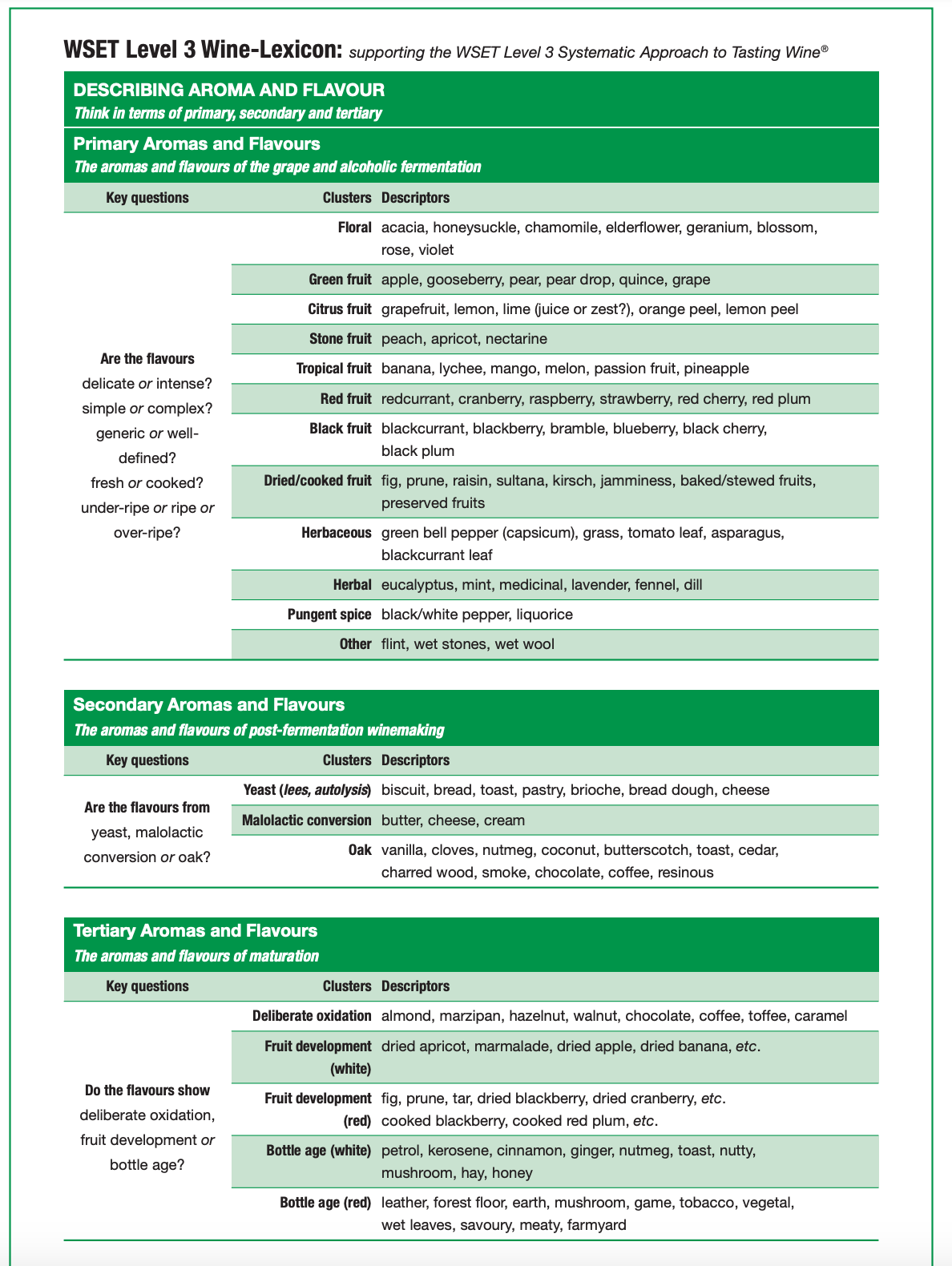
Some of the sensations to consider are: is my mouth dry from the tannin? Is there the tingle on my tongue from alcohol? How viscous is the wine? etc etc.
Final one isn’t an S so doesn’t sound as good but in effect, you then need to make your Conclusion on the wine (ie. the quality).
The range is as follows:
faulty - poor - acceptable - good - very good - outstanding
How on earth do you decide on the above. WELL! There’s more.
There are 4 criteria. If the wine meets one of the below, its acceptable, two its good, none it’s poor… you get the gist:
Balance - does the wine balance its acidity, alcohol content, sugar content so that not one of those things overpower the others
Length/Finish - how long does the taste of the wine linger in your mouth. Typically, the longer it stays, the more you taste, the better the wine
Intensity - if its weak and diluted, we know the wine is crap, but obviously we don’t want it knocking us for six like a tequila, so there is a limit, but we want it to be velvety and a treat.
Complexity - this is two fold: either you look for total purity in its fruity primary flavours, which some winemakers focus entirely on OR a mixture of primary (flavours from grapes), secondary (flavours from the fermentation process) and tertiary (flavours from ageing process).
And finally, enjoy it with friends and family.
Love and Champagne,
Harry
Another brilliant piece of writing - loved it!